

Going deeper into the payments stack.
The ground truth data banks and fintechs build on.
Overview
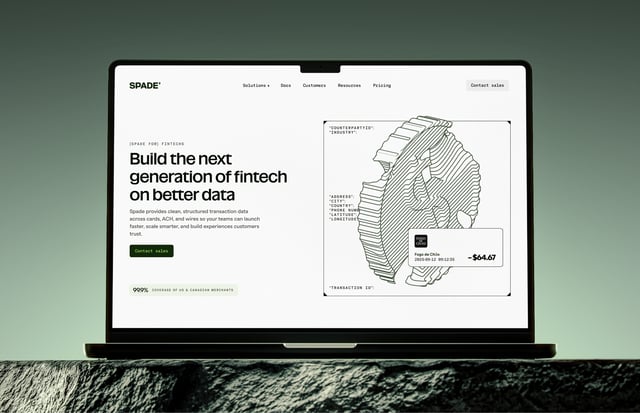
Spade turns raw card transactions into verified merchant data, drawn from 99.9% of businesses that accept payments in the US and Canada. Heading into its Series B, it set out to become as ubiquitous as Plaid, a critical part of the payments stack for fintechs and banks alike. Today, every part of Spade shows how much deeper it goes than other enrichment tools, all the way down to the ground truth.
Our Role
Positioning
Brand strategy & messaging
Visual & verbal identity
Website design & copy
Website development



Key Decisions
Present Spade as infrastructure.
Banks had learned to doubt enrichment vendors and wanted data solid enough to build on.



Lead with verified coverage.
Customers trust how many real businesses Spade has verified, not how clever its models sound.







Make Spade the data beneath AI.
As agents take on financial work, we made Spade the verified data layer they depend on.


A story deeper than enrichment.
Positioning and a creative concept, built on ground truth other tools miss.The insight banks and fintechs need is buried in layers of fragmented transaction data, and most enrichment tools only skim the surface, leaving gaps a bank can’t afford. Spade digs deeper, adding context at every layer until it reaches the ground truth, and delivers it in real time. We built the positioning around depth, which led us to our creative concept, Access All Layers, and a belief that the future of money should be built on ground truth data.

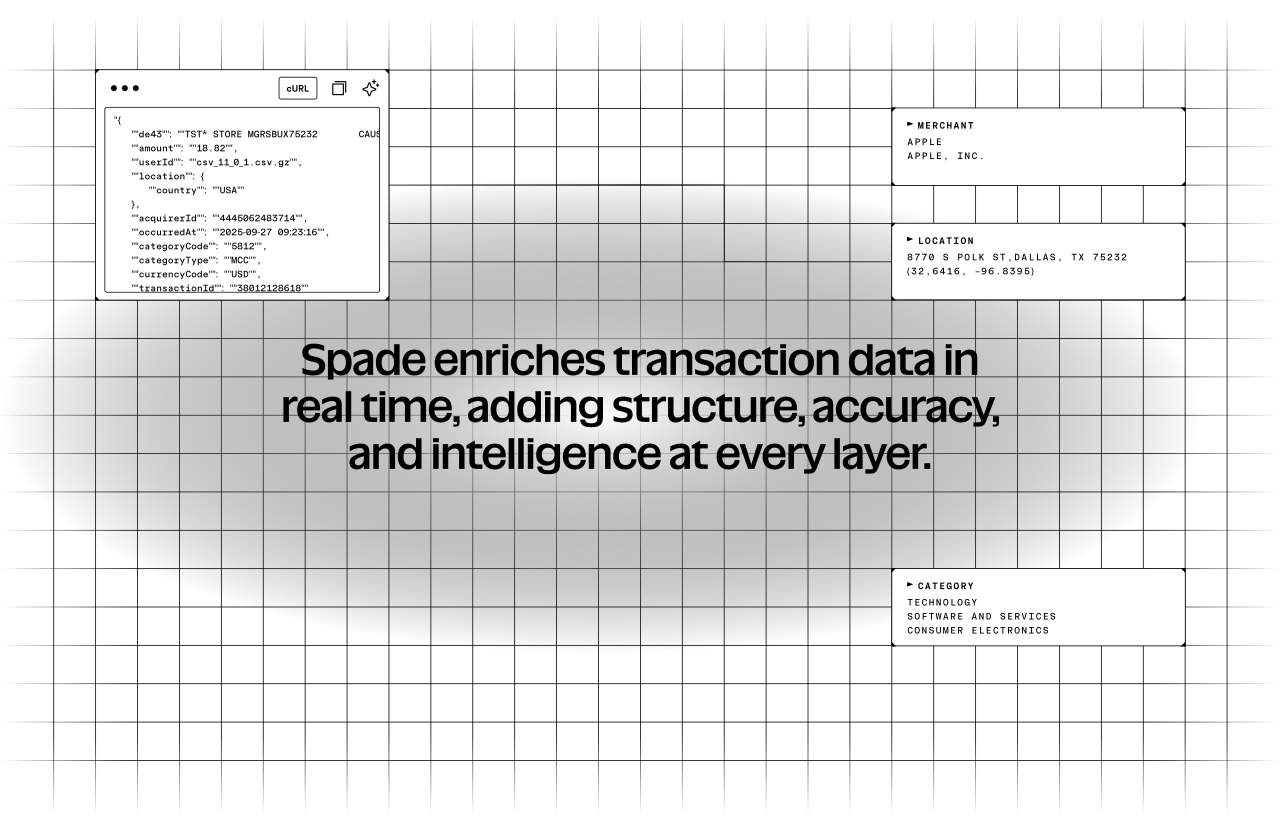
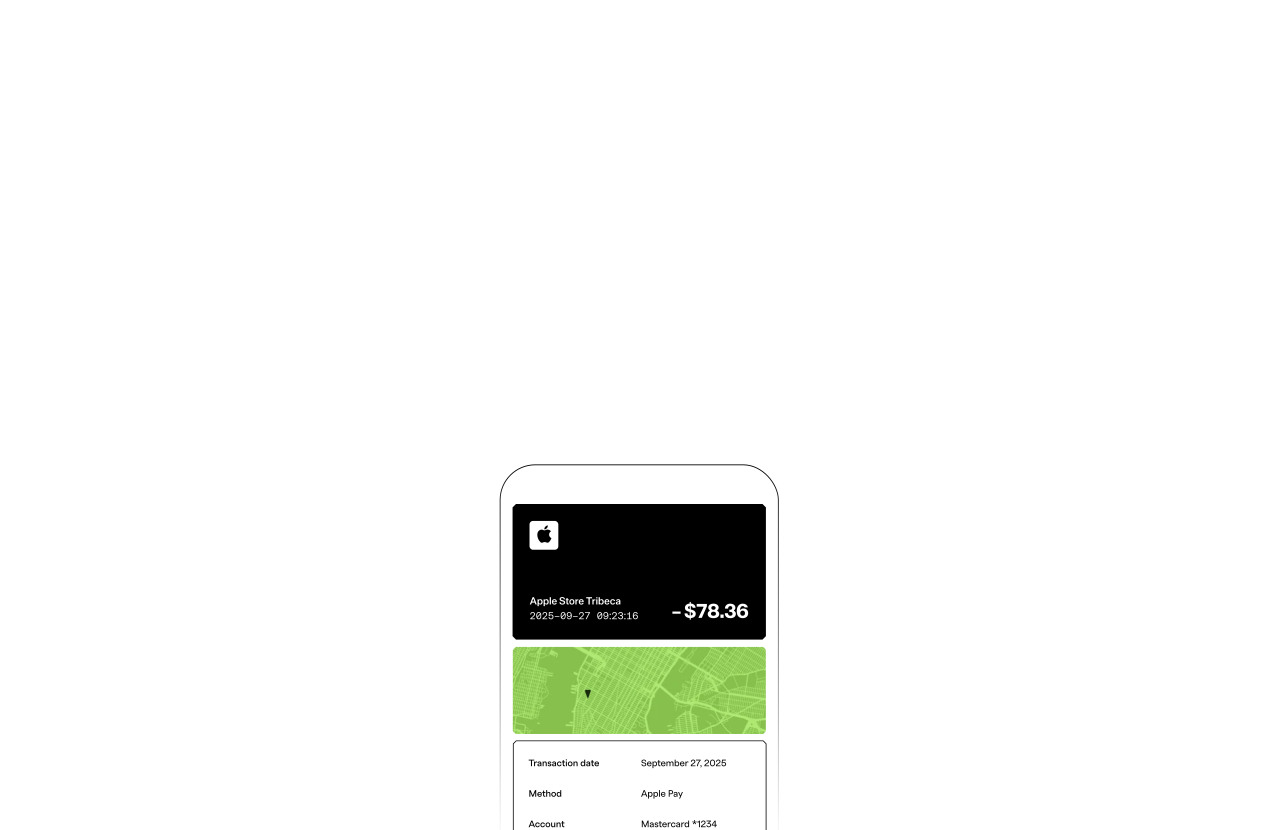

Showing what sits beneath a purchase.
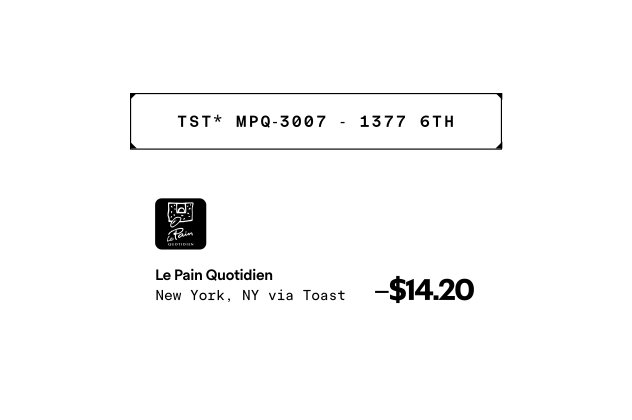
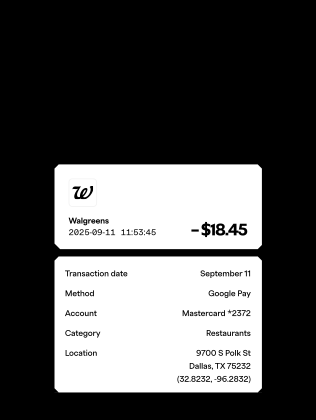
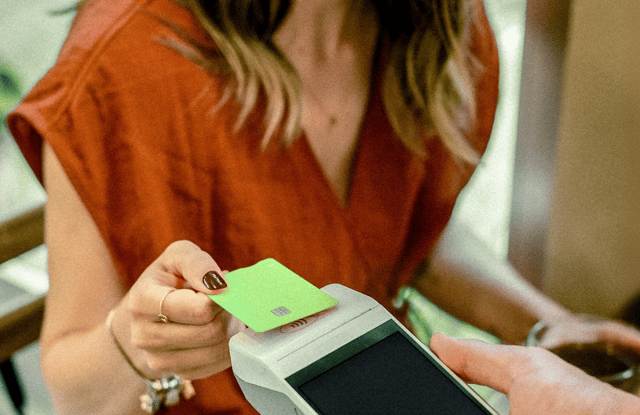
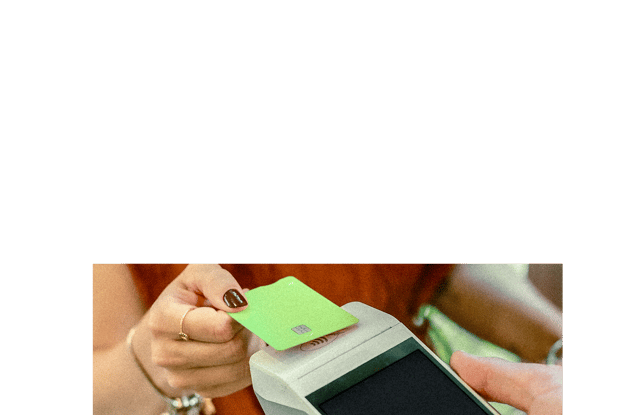
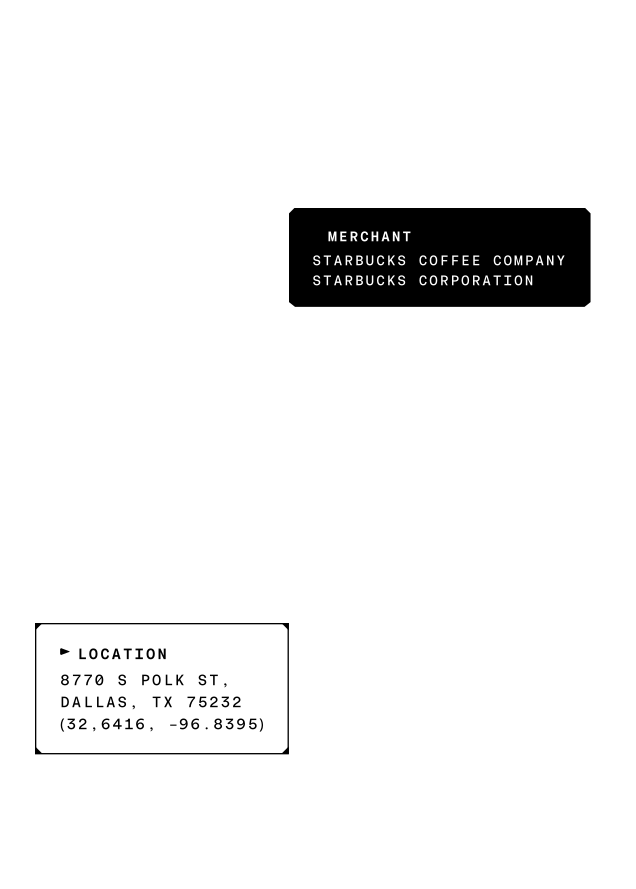
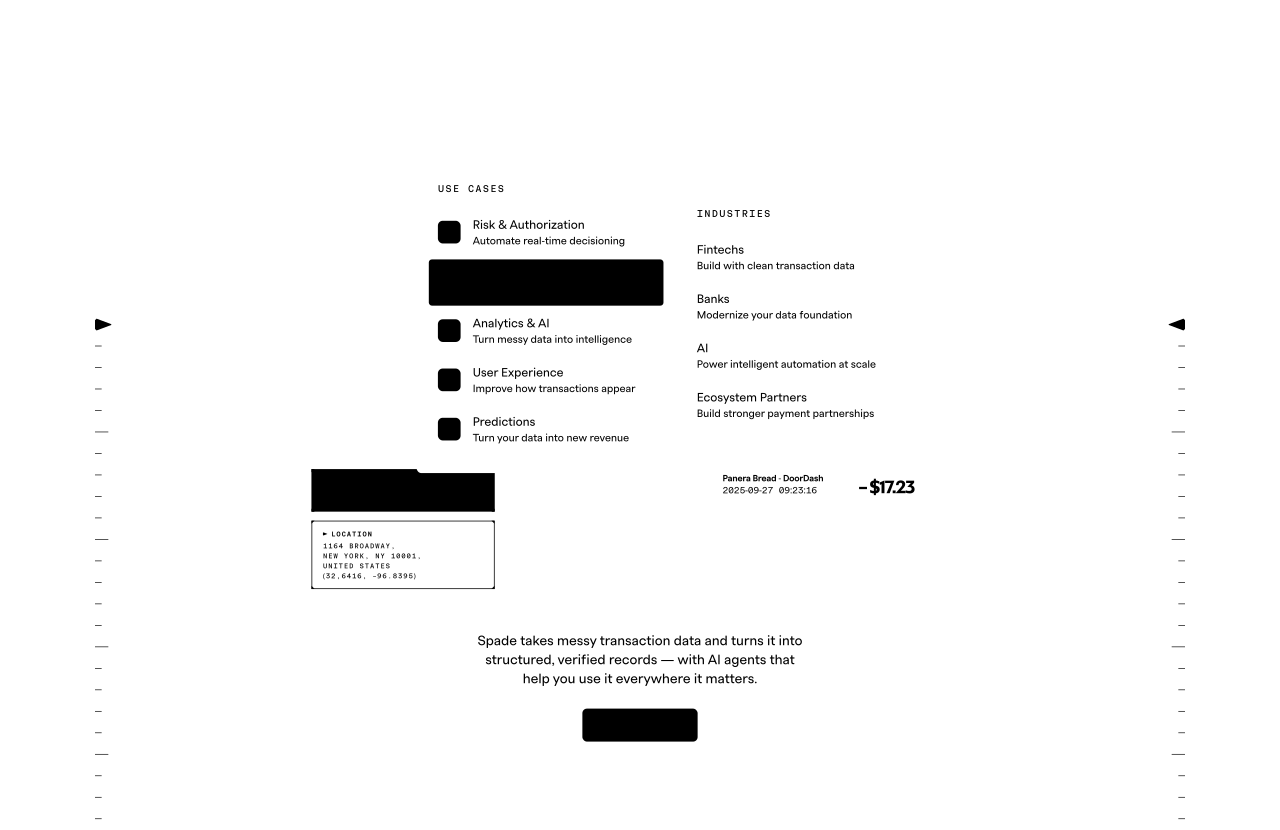
An illustration system built on everyday spending, from coffee to gas.An API is a modest thing to photograph, since its value shows up inside someone else’s systems. So we built the illustration system around moments everyone recognises instead, like shopping, buying a coffee or filling up at a gas station. Each one reveals the verified merchant, location and category Spade adds beneath the card transaction, showing banks and fintechs what they gain when they stop settling for data that only skims the surface.









A route for every kind of buyer.
A site with separate routes for fintechs, banks and AI teams.New fintechs, scaling fintechs and banks each find, evaluate and buy from a vendor differently. Mapping those journeys showed what each buyer feels at each stage as well as what it does, so every route opens on that buyer’s own problem rather than Spade’s product. Nobody has to translate Spade’s offer for themselves, and the industry pages share a blueprint Spade can reuse as it enters new markets.


Real data, real proof.
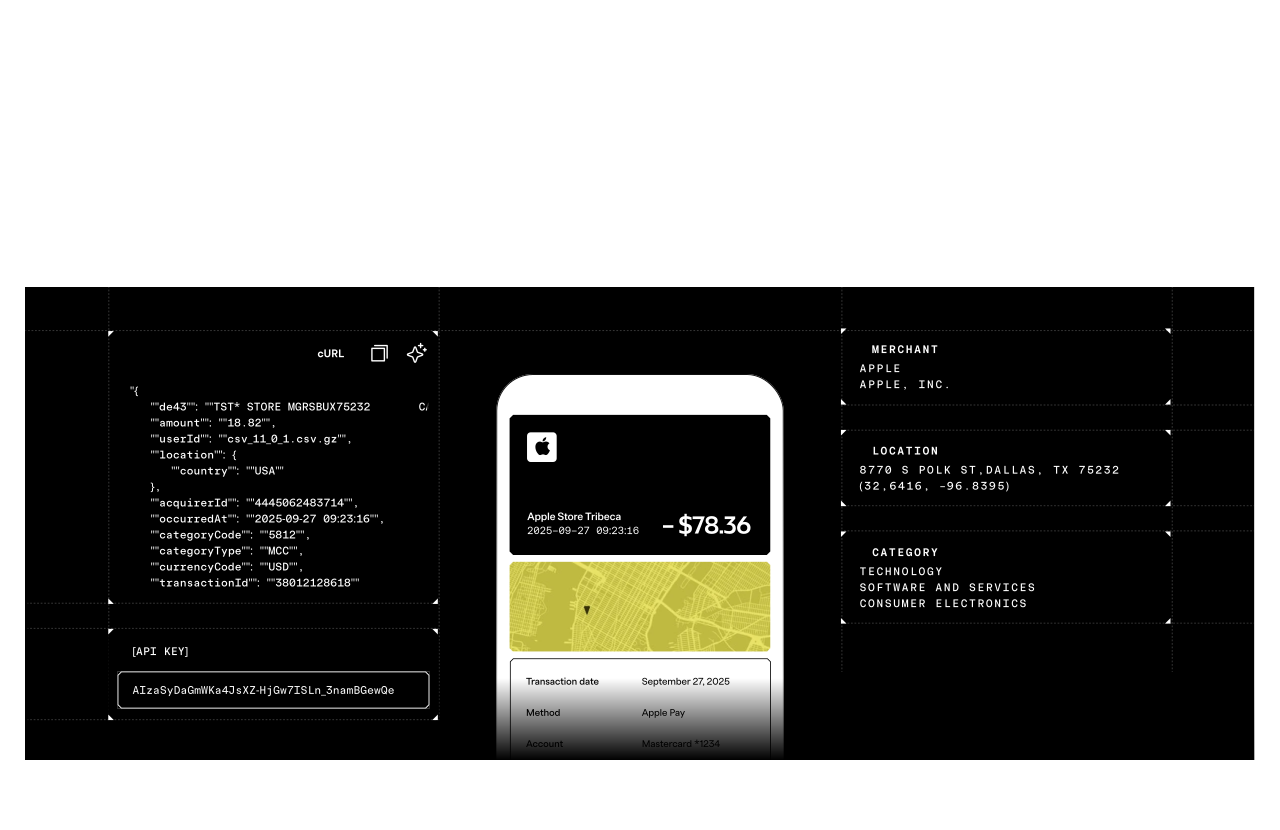
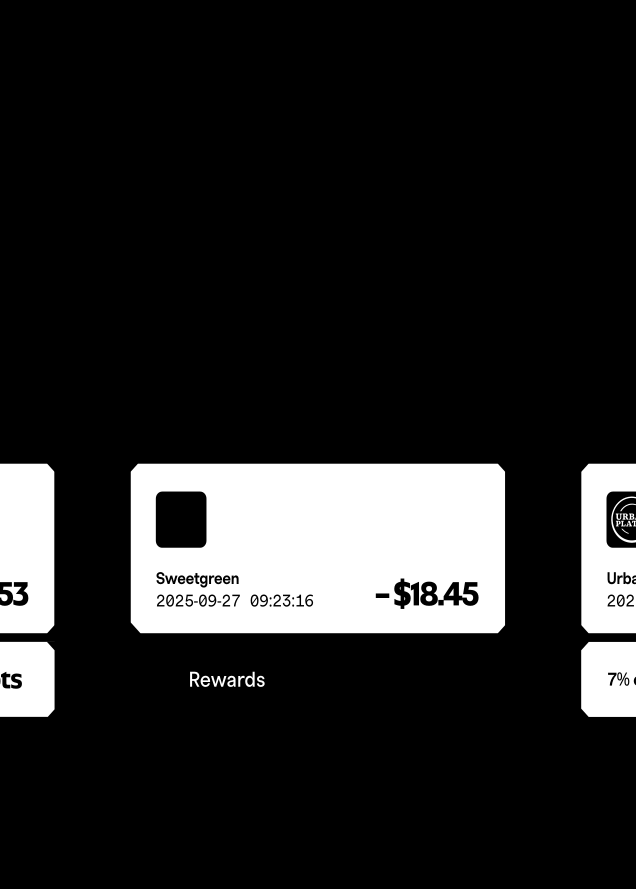
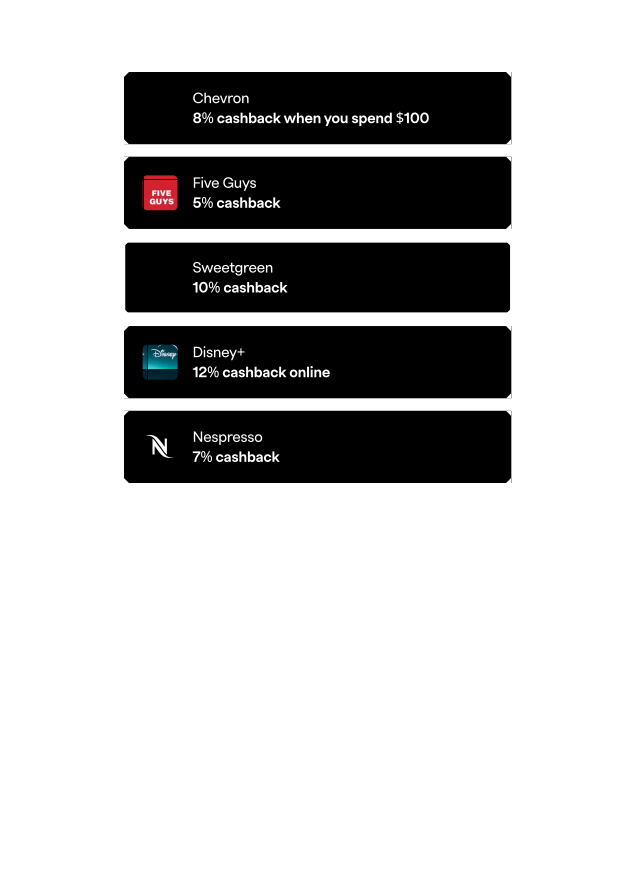
Product shots and flow diagrams that show what Spade’s API actually returns.Banks and fintechs judge a data vendor by checking its output, so the site had to show real output rather than describe it. We designed product shots of API responses and transaction types, and diagrams of how Spade handles data in real time and in batches, using realistic transactions rather than placeholders. A product with almost no interface of its own now has something to show across every surface.






From one product to a platform.
A restructured site and navigation for three connected product suites.Once Spade offered more than enrichment, buyers needed to see how its products fit together rather than meet them one by one. Predictions helps banks and fintechs anticipate what their users want, whilst data operations lets teams add labels, rewards or controls to specific merchants. So we restructured the site around three connected suites, with one story that presents Spade as the transaction data layer for financial services.


A dashboard banks and fintechs can explore.
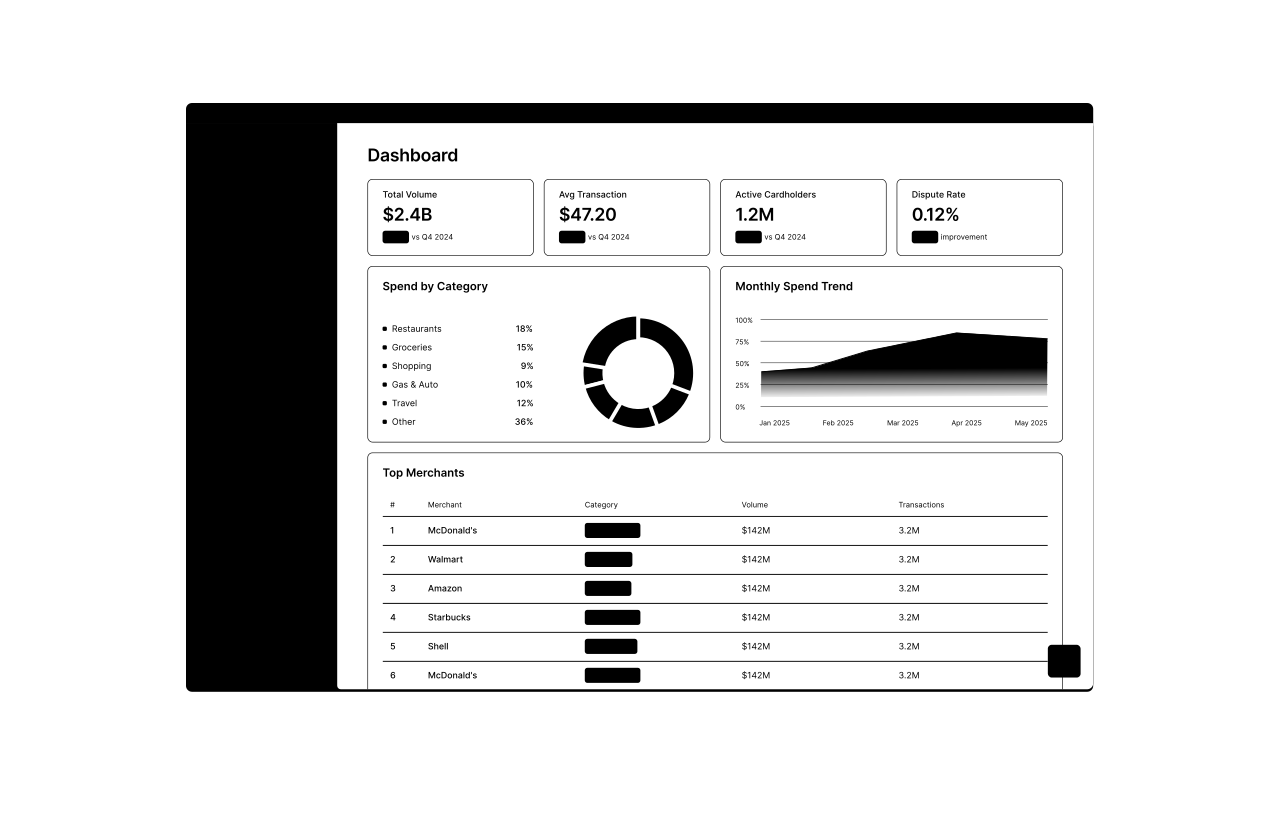
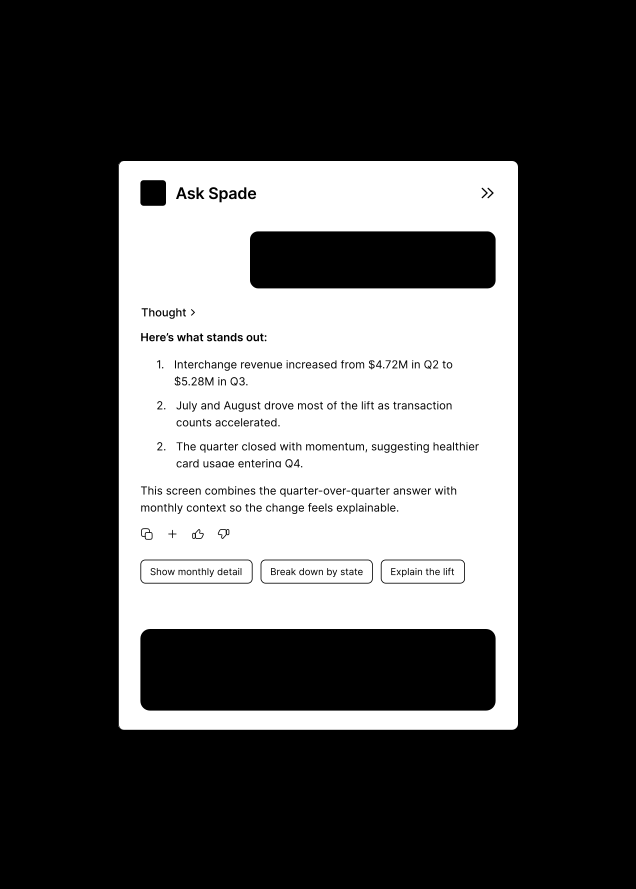
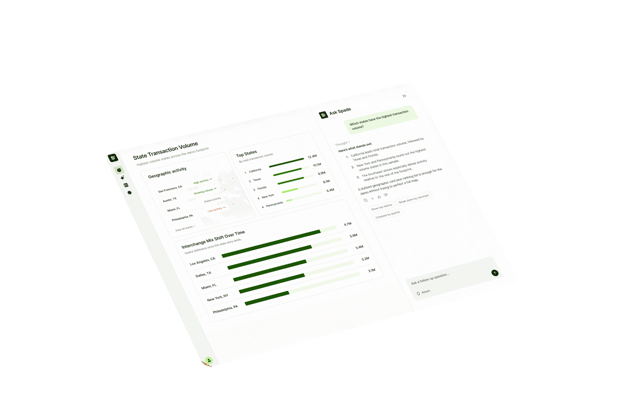
An interface for querying Spade’s data and getting answers.Increasingly, Spade’s users were no longer only engineers calling an API, but analysts who needed to explore merchants, categories and locations for themselves. We designed a dashboard around how they dig into that data, and carried the identity from the website into the product, so a bank meets the same Spade before and after it signs.




With Thanks To
Oban MacTavish, Lauren Crossett, Hailey McCracken, Anna Dalton and the team at Spade.
Next Case Study
A new chapter for embedded finance.